
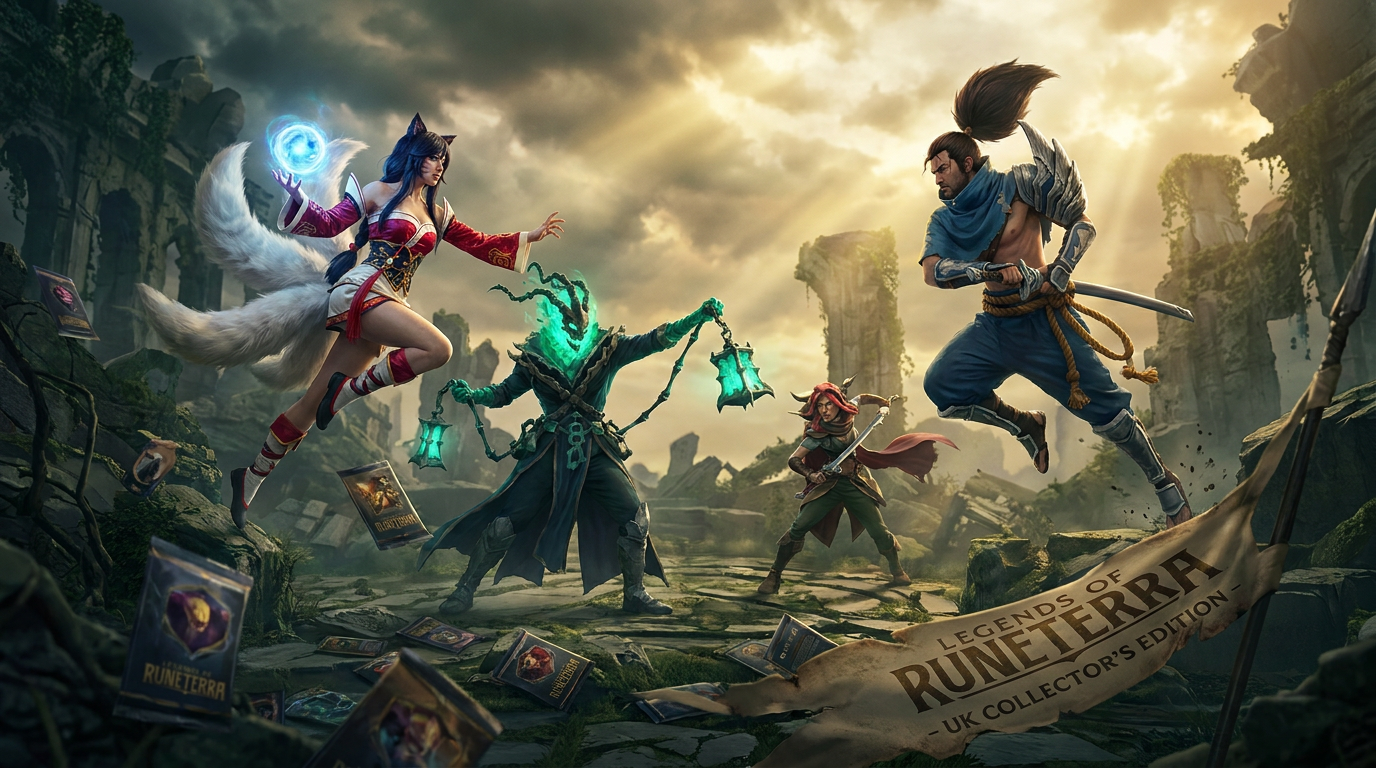
Anyone curating a modern card binder knows the familiar pinch of chasing elaborate foil treatments and alternate-art staples. Between international shipping pressures and rapid secondary market spikes on Western releases, filling nine-pocket pages can quickly become an exercise in budget management rather than pure appreciation.
That reality has pushed many UK collectors toward regional Asian prints. While Japanese cards have long held a respected seat at the table, Korean editions have quietly carved out their own following. For those eyeing the distinctive dark fantasy aesthetic of Riftbound, Korean printings present an intriguing question: is it genuinely worth slotting these foreign-language cards into your collection, or do they feel like a compromise?
Card Stock and Foil Finish
The most common hesitation with Korean cards across any trading card game usually circles around print quality. Historically, collectors sometimes found Korean runs to feature slightly thinner stock or less pronounced texture than their domestic counterparts.
With contemporary Riftbound, however, the gap is remarkably narrow. The card stock holds up well to standard sleeving, remaining crisp and resistant to premature edge-wear. More importantly, the foil applications retain the depth and contrast that define the game's visual identity. Highlight passes catch the light cleanly, and the deep, atmospheric colour palettes do not suffer from the murky over-saturation that occasionally plagued older Asian imports. If you appreciate the artwork first and foremost, these cards deliver on page after page.
Featured products
The Binder Appeal: Art Over Text
The primary appeal of Korean Riftbound comes down to accessibility. Booster boxes and individual chase cards frequently land in the UK at a fraction of the cost associated with English print runs. For binder collectors who want the full illustrative spread without paying a heavy premium for competitive tournament legality, this pricing differential is hard to ignore.
Riftbound relies heavily on bold character designs, intricate creature concepts, and moody environmental pieces. Much like Japanese Pokémon or Korean One Piece, the beauty of an illustration is not diminished because you cannot immediately read the flavour text. In fact, many collectors find that Korean typography integrates cleanly into the frame, lending the cards an understated, import-catalogue feel that looks superb in a dedicated folio.
Trade-Offs and Collector Realities
It is worth being clear-eyed about where Korean Riftbound sits in the wider hobby. If your goal is local tournament play at your nearest game shop, language restrictions usually rule foreign-language prints out of official decks. You will also find that local trade nights tend to favour English singles, meaning liquidating or swapping high-rarity Korean cards takes a bit more patience and a specialised audience.
Furthermore, sourcing requires care. Because import supply chains vary, it pays to buy from reputable vetted suppliers who handle international stock properly, ensuring boxes arrive untampered and without transit dings to the corners.
Yet for the pure binder builder, those caveats are easily managed. If you view your collection as an archive of striking card art rather than competitive game pieces, Korean Riftbound offers a thoroughly satisfying, visually rich path that treats your wallet with a bit of respect.
Browse the categories mentioned in this guide: